Project Brief
This application case addresses a common furniture and metal-profile packing problem: long finished surfaces need separation, while straight edges and irregular corners need protection that stays in the correct position during storage and transport. A single flat sheet may cover a surface but cannot always fit a corner consistently. A shaped profile may protect the edge but does not cover the full face. The practical solution is therefore a coordinated pack rather than one material used everywhere.
Hongsen Packaging manufactures EPE foam and protective packaging in Xinxiang, Henan, China. Established in 2002, the company supports standard foam supply and custom conversion from customer dimensions, drawings or physical samples. This case is based on products currently manufactured and supplied by Hongsen and the company’s published sampling workflow.
The Packaging Risks to Review
Furniture panels and aluminum profiles may be damaged by direct contact, rubbing, exposed corners or movement within a bundle. High-gloss, painted, coated and anodized surfaces can also respond differently to prolonged material contact. The packaging specification should therefore identify the finish, edge geometry, component length, packed weight and how the items are stacked or bundled.
Another risk is inconsistent installation. A protector that is too loose may move before the outer wrap is applied, while a profile that is too tight can be difficult for workers to fit and remove. Packing speed matters, but fit and surface compatibility should be checked first.
Packaging Configuration
Fitted Edge and Corner Protection
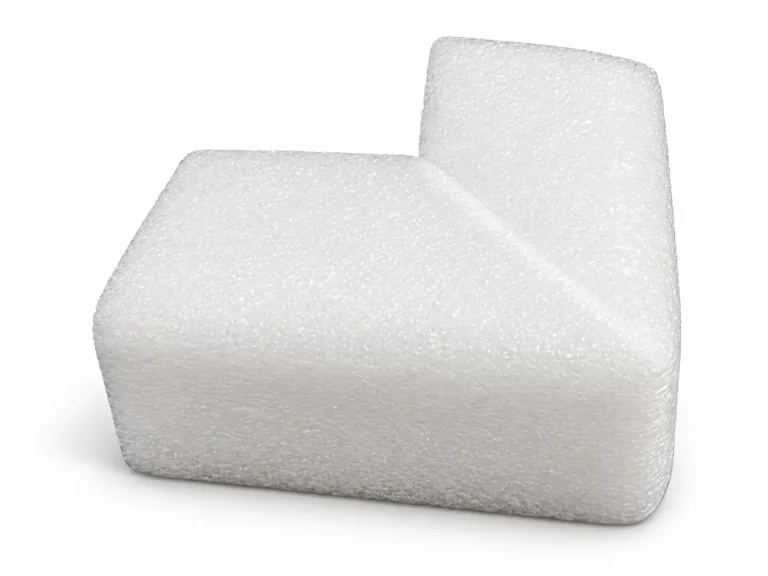
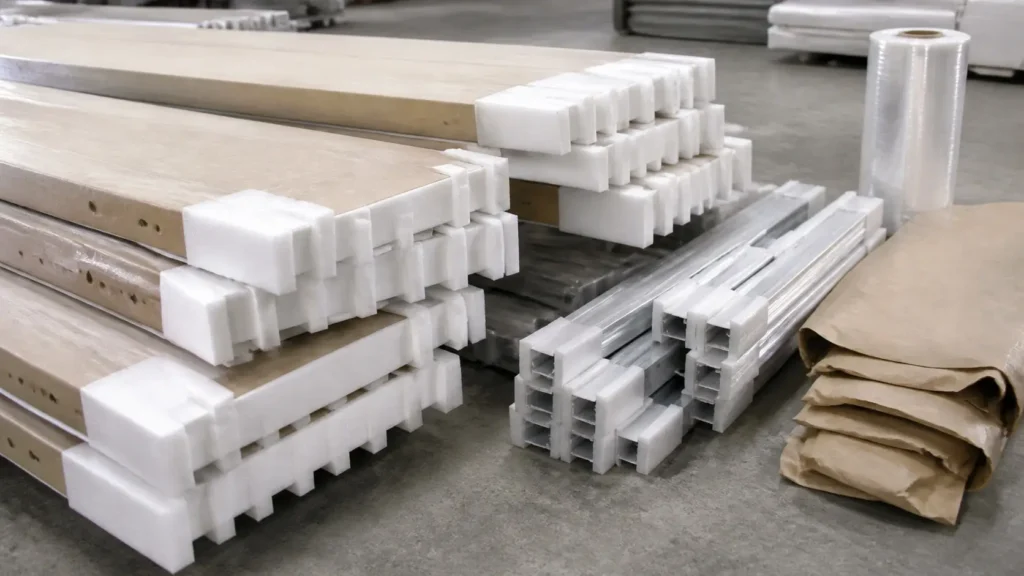
EPE foam edge protectors provide the first line of protection at exposed straight edges and corners. L-, U- or V-shaped formats can be selected according to the cross-section. The buyer supplies the edge thickness, profile geometry, coverage length and photographs showing any joints or cut-outs. These details allow the protective shape to be reviewed around the actual component.
Custom Profiles for Irregular Sections
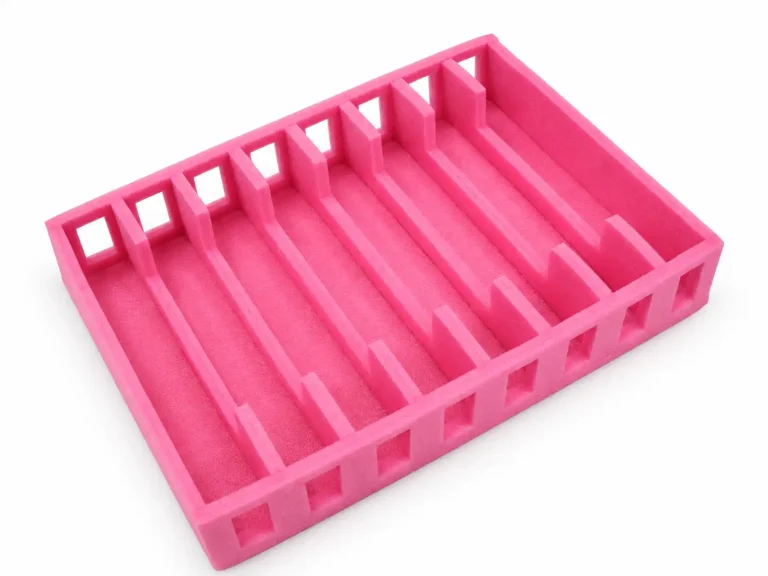
Where standard protectors do not match the geometry, custom EPE foam profiles can be developed from a drawing or sample. The design should mark permitted contact areas and any decorative features that must remain clear. A physical fit check is useful for confirming the cross-section, slit arrangement and installation direction before volume production.
Surface Separation and Wrapping
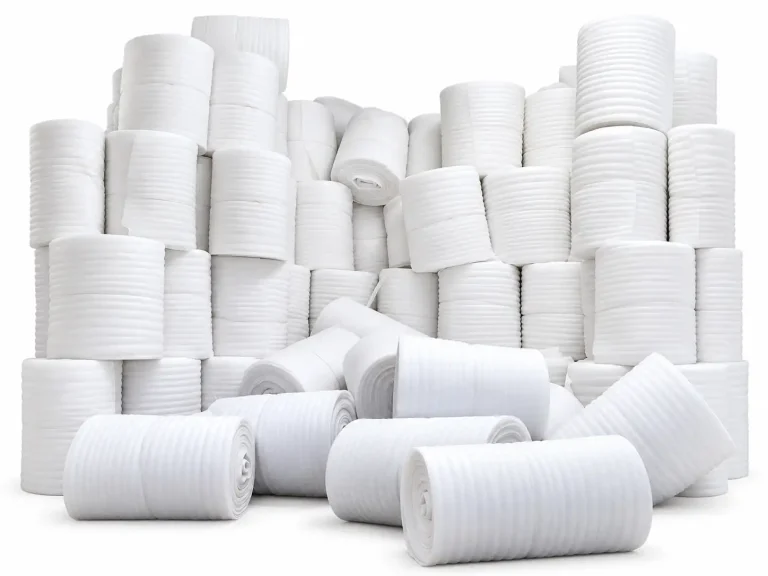
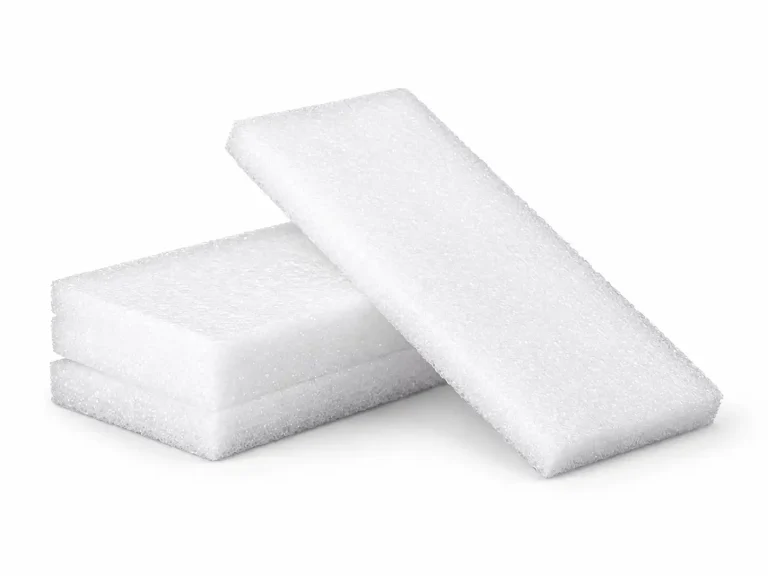
EPE foam roll or EPE foam sheets can separate broad faces and adjacent components. Rolls suit packing stations that cut different lengths, while pre-cut sheets offer a repeatable size for a stable product range. Width, thickness, density, color and laminated surfaces can be discussed according to the application.
How the Pack Is Assembled
- Inspect the finished surface and identify vulnerable edges, corners and protrusions.
- Apply the confirmed edge protector or custom profile in the documented orientation.
- Add sheet or roll material between finished faces and around required surface areas.
- Place accessories and hardware where they cannot contact visible surfaces.
- Complete the bundle, carton or pallet wrapping according to the agreed packing method.
The outer packaging must keep the protective components in position without applying harmful pressure. Stretch film, cartons, strapping or pallet restraint may form part of the wider packing system, but each performs a different function. Foam surface protection should not be treated as a substitute for structural load restraint.
Sampling and Quality Confirmation
The sample review uses the actual panel or profile wherever possible. The team checks installation, fit, removal and contact with the finish. If several panel thicknesses share one packaging specification, every intended size should be included in the review. The complete pack should then be evaluated under the buyer’s handling and transport conditions.
Hongsen reviews incoming materials, monitors production and checks finished packaging against agreed requirements. The approved drawing or sample should record dimensions, tolerances, color, appearance, packing quantity and any special inspection needs. For delicate coatings or long storage periods, the buyer should validate material compatibility with the actual finish.
Why This Configuration Fits the Application
- Shaped foam focuses protection on exposed edges and corners.
- Sheets or rolls separate broad finished surfaces.
- Custom conversion follows the actual component geometry.
- A documented packing sequence improves repeatability.
- Standard materials and converted components can be ordered as a coordinated supply.
Evidence and Performance Limits
This application case describes a packaging approach based on Hongsen’s published products and manufacturing process. It does not claim a measured damage-reduction percentage or guarantee performance for every route. Product weight, finish, clearances, the outer pack and distribution conditions affect the result. If drop, vibration, compression or stacking validation is required, the buyer should provide the test method and acceptance criteria.
Information Needed for a Similar Project
- Panel or profile dimensions and actual packed weight
- Edge cross-section drawings and coverage lengths
- Finish type and photographs of vulnerable surfaces
- Bundle, carton or pallet arrangement
- Current packaging and known damage points
- Order quantity and mix of sizes
- Required inspections or transport tests
Frequently Asked Questions
Can one EPE profile fit several edge thicknesses?
Possibly, but each intended thickness must be checked. A universal fit should not be assumed from one sample.
Can Hongsen reproduce an existing protector?
Yes. A physical sample or dimensioned drawing can be used as a starting point. Share any fit or installation problem that should be improved.
Does EPE prevent all surface marking?
Material contact depends on the finish and storage conditions. Evaluate the proposed foam with the actual surface before approval.
Discuss Your Furniture or Profile Packaging
Send Hongsen your dimensions, drawings and packing photographs. Review our custom processing service, explore the related furniture and logistics solution, or contact the team to arrange a sample review.