Practical Packaging Guide
Prepared by Hongsen Packaging Team, sharing practical material and custom-processing guidance from our packaging manufacturing experience since 2002.
Stretch film, PE bags and packaging tape are often ordered together, yet they are not substitutes. A PE bag encloses a product or group of parts. Stretch film applies holding force around a load or wrapped item. Tape closes cartons and secures selected packing components. Treating all three as generic plastic packaging leads to poor specifications and inconsistent use.
A practical selection starts by defining what each layer must do during storage, internal handling and transport. The following guide explains those roles without assigning performance values that can only be confirmed from material construction, dimensions and a real packing trial.
PE bags provide enclosure and separation
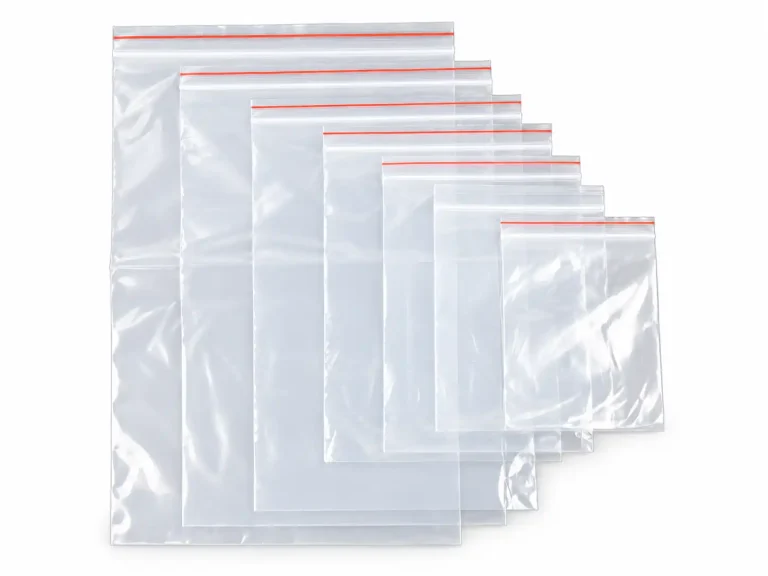
Custom PE bags are a useful starting point when a product needs a clean outer layer, grouping or separation from dust and surrounding materials. They can enclose components before those components enter a carton or crate. Bag dimensions must account for product depth, projections and the required opening direction, not only flat length and width.
A bag does not automatically immobilize an item or protect a vulnerable corner. If movement, impact or rubbing remains possible, cushioning and restraint should be considered separately. Closure style and operator access also need confirmation during sampling.
Stretch film stabilizes and bundles
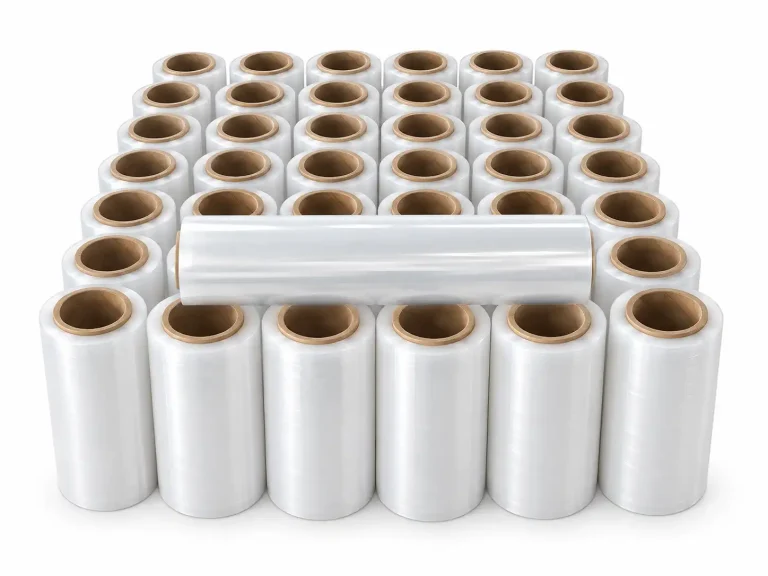
Stretch wrap film is commonly used to bundle items, hold protective layers in place or stabilize cartons on a pallet. Its value comes from controlled application around the load. Too little overlap may leave the arrangement loose; excessive force can distort light cartons or compress sensitive products.
The load pattern should be observed before selecting a film. Carton height, sharp corners, protrusions, pallet condition and manual or machine application all affect use. Corner protectors or a better stacking pattern may solve a problem that extra film alone cannot.
Packaging tape closes and secures
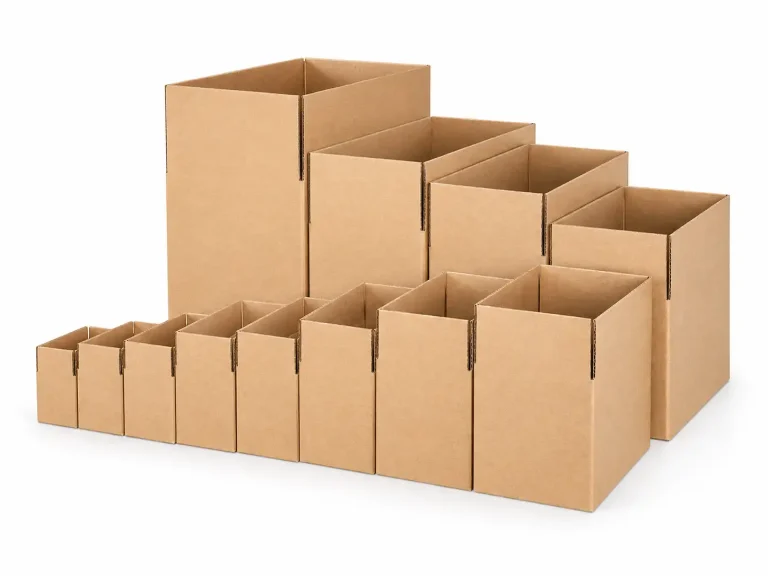
Adhesive packaging tape is primarily a closure and securing material. It can close corrugated cartons, fix selected wraps or mark a packing operation when colour or printing is agreed. Tape performance depends on the carton surface, cleanliness, application pressure, storage and the closure pattern.
Tape should not be used to compensate for a carton that cannot close without force. Bulging flaps often indicate too much internal material or incorrect carton dimensions. Correct the pack before increasing the amount of tape.
Quick role comparison
| Material | Primary job | Good starting use | What it cannot solve alone |
|---|---|---|---|
| PE bag | Enclosure and separation | Individual products, components and grouped parts | Impact, edge damage or movement |
| Stretch film | Bundling and load stabilization | Pallets, grouped cartons and holding wraps | Weak stacking or unsupported projections |
| Packaging tape | Closure and local securing | Carton seams and selected packing parts | Incorrect carton fit or major load movement |
| Combined use | Coordinate enclosure, restraint and closure | Multi-layer industrial packs | Unclear packing instructions |
Build the layers in the right order
Start with the product surface. Add a bag or foam layer if separation is needed. Apply edge or corner protection before stretch film so the film can help hold those components in position. Place the protected item in the correct carton, close the flaps without forcing them and apply the agreed tape pattern. Pallet stretch wrapping comes after carton stacking has been reviewed.
Every layer should be inspectable. Operators need to see whether a bag is fully fitted, whether a protector has moved, whether tape crosses the correct seam and whether film tension is distorting the load. A simple packing instruction with photographs is often more useful than a material list alone.
Selection factors beyond nominal size
For bags, provide the fully packed product dimensions and consider gussets, openings and ease of insertion. For stretch film, explain the load height, total arrangement, application method and any sharp edges. For tape, identify the carton material, seam pattern and storage conditions. Suppliers cannot infer these details from a request for a common width.
Quantity and packing frequency also matter. A flexible manual method may suit mixed small batches, while a stable high-volume line benefits from clearly defined sizes and steps. The lowest unit price is not meaningful if operators use twice as much material to achieve consistency.
Common mistakes
- Ordering a flat bag to the exact product length and width without allowing for depth.
- Increasing stretch-film tension when the real issue is an unstable stacking pattern.
- Using tape to force closed a carton that is overfilled.
- Wrapping sharp corners without checking whether they cut or puncture the film.
- Changing one layer without confirming how it affects the rest of the packing sequence.
Information for a useful quotation
Send product and fully packed dimensions, photographs, weight and quantity. Explain whether the bag contacts a finished surface, whether stretch film is applied manually or by equipment, and which carton seams require tape. Include pallet size and stacking pattern when load stabilization is part of the request.
Describe the current problem in practical terms: bags are difficult to insert, protectors move, cartons open, film tears or the pallet becomes unstable. Hongsen Packaging can review the three materials together with cartons and cushioning through its custom packaging service.
Frequently Asked Questions
Can stretch film replace a PE bag?
Usually not when full enclosure or clean separation is required. Stretch film bundles and restrains, while a bag provides a defined enclosure.
Can tape hold foam protectors in place?
It may secure selected components, but compatibility with the surface and removal method should be checked. Stretch wrapping or a fitted design may be cleaner.
Why does a carton bulge after taping?
The carton may be overfilled or the internal arrangement may be incorrect. Review fit before adding more tape.
What dimensions should be supplied for a PE bag?
Provide length, width and depth of the item in its packed condition, plus projections and the preferred opening direction.
Discuss your packaging requirement
Need to coordinate bags, film and tape?
Share the complete packing sequence and current problem. Hongsen Packaging can help separate enclosure, restraint and closure into clear material requirements.
Share the product details first so the recommendation can be based on the actual packing task.
Need help with a packaging requirement?
Share your product dimensions, transport conditions and order quantity. We will help clarify the next step.